
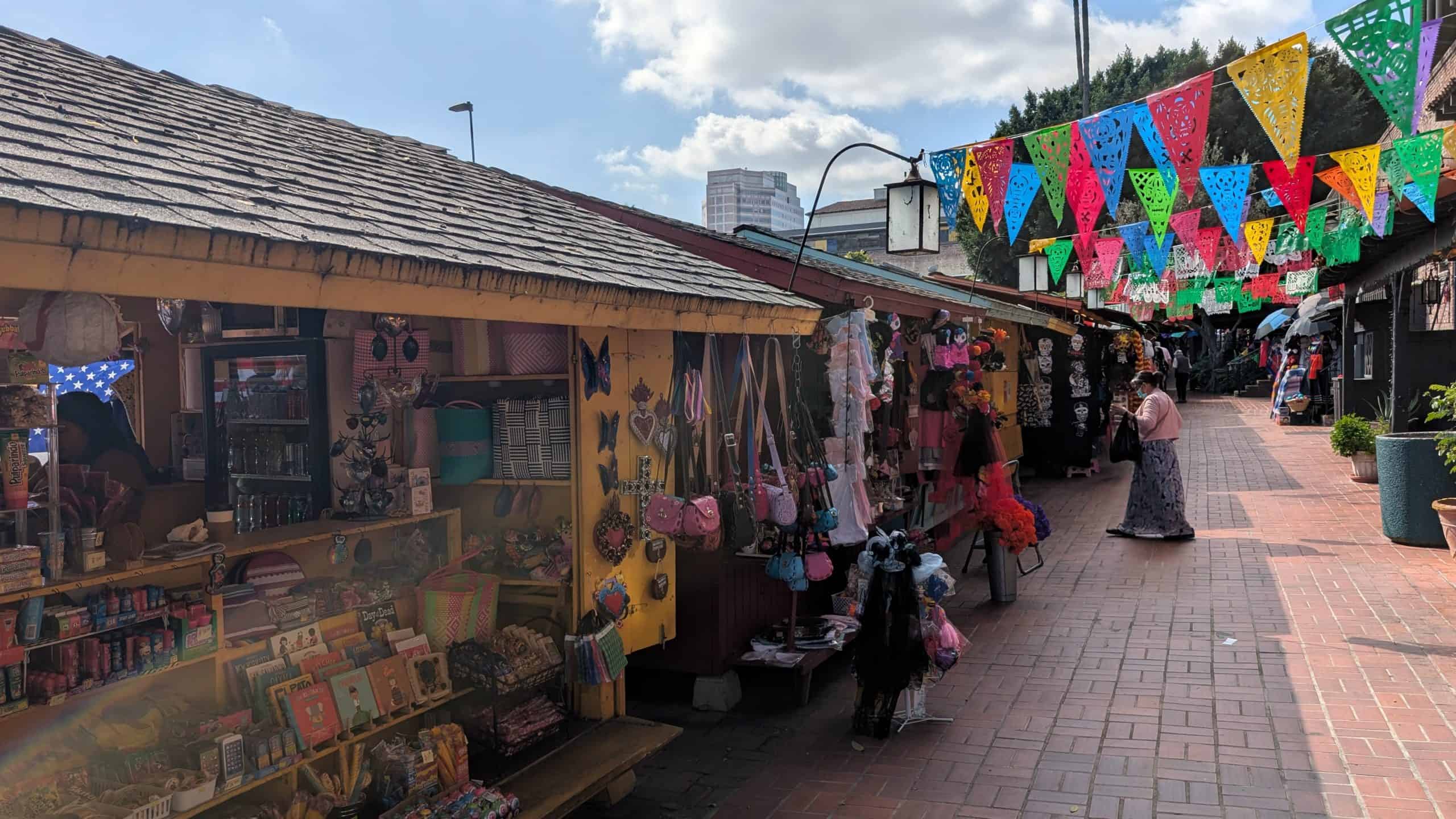
When I first came to Los Angeles, I didn’t even know Olvera Street existed. Honestly, I was only here because the weather was pleasantly warm in winter. While Germany was dealing with gray skies and cold weather, I could walk around Southern California in a T-shirt.
I hadn’t really given it much more thought than that.
With Google Maps guiding me, I was walking from somewhere around the Civic Center toward Union Station. Along the way, I passed people experiencing homelessness, crossed enormous streets, and suddenly found myself facing a massive freeway. Back then, I didn’t even know it was the famous 101.
At a big intersection, a naked man ran screaming across the street. I suspected he might have been under the influence of drugs. Welcome to Los Angeles!
Just a few minutes later, I was standing in a little plaza surrounded by palm trees, historic buildings, and Mexican music. Colorful banners stretched across a narrow street, people sat outside restaurants, and the smell of freshly prepared food drifted through the air. After all that concrete, traffic, and chaos, I felt as though I had accidentally wandered into another country.
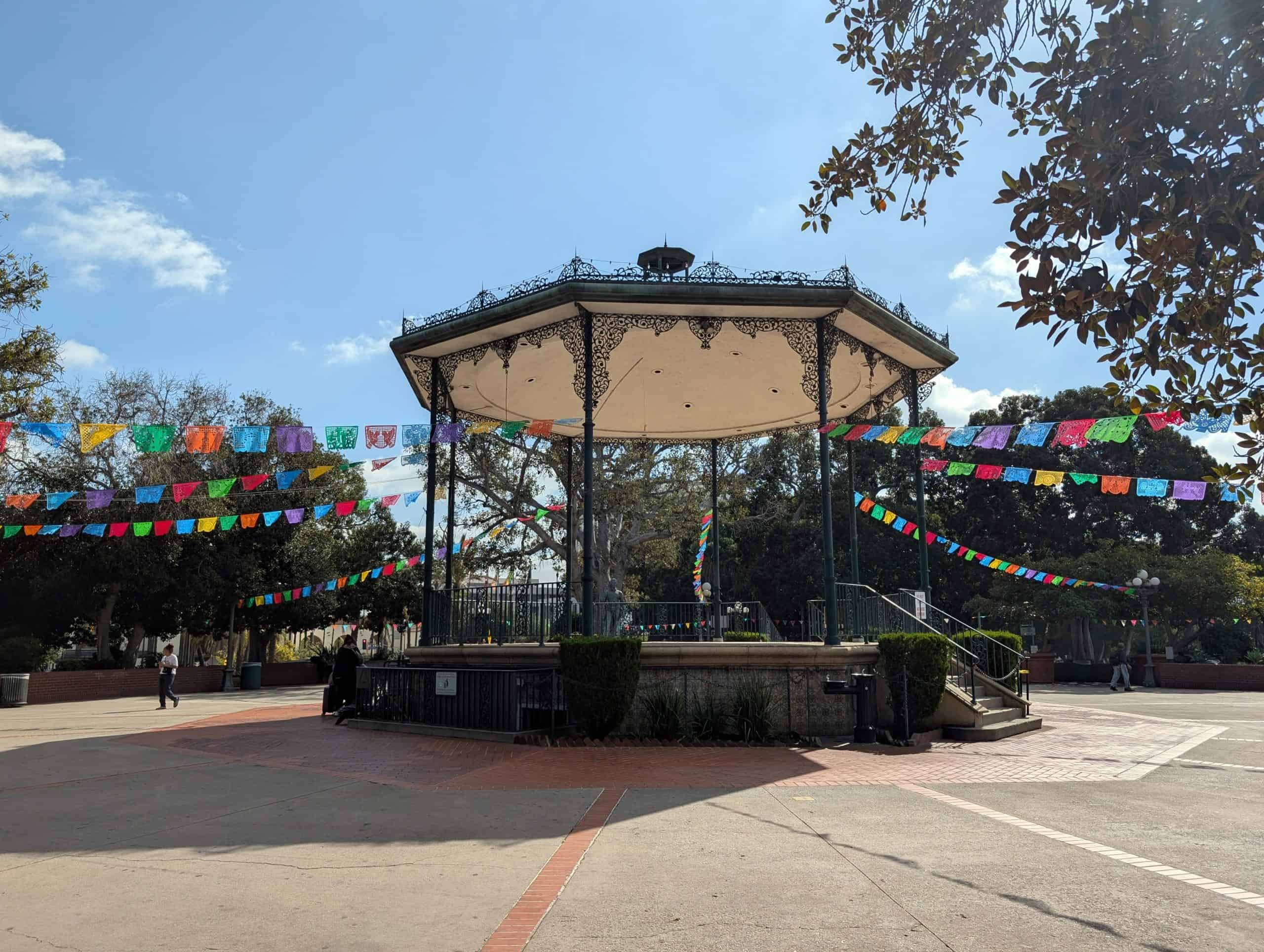
That’s how I discovered Olvera Street. And to this day, it remains one of those places that, to me, explains the character of this city better than many of its famous attractions.
Olvera Street – Where Los Angeles Began
Lots of visitors stroll along Olvera Street without realizing how important this area is to the city’s history. This is where the story of modern Los Angeles really began!
The Spanish pueblo of Los Ángeles was founded just a short walk away in 1781. But the history of this area goes back thousands of years. Long before the Spanish arrived, Indigenous communities, particularly the Tongva, lived here in numerous settlements throughout the region. The Spanish pueblo later grew into one of the world’s largest metropolitan areas.
Today, Olvera Street is part of the El Pueblo de Los Angeles Historical Monument. Among the souvenir shops, restaurants, and market stalls are historic buildings that tell the story of the city’s early years.
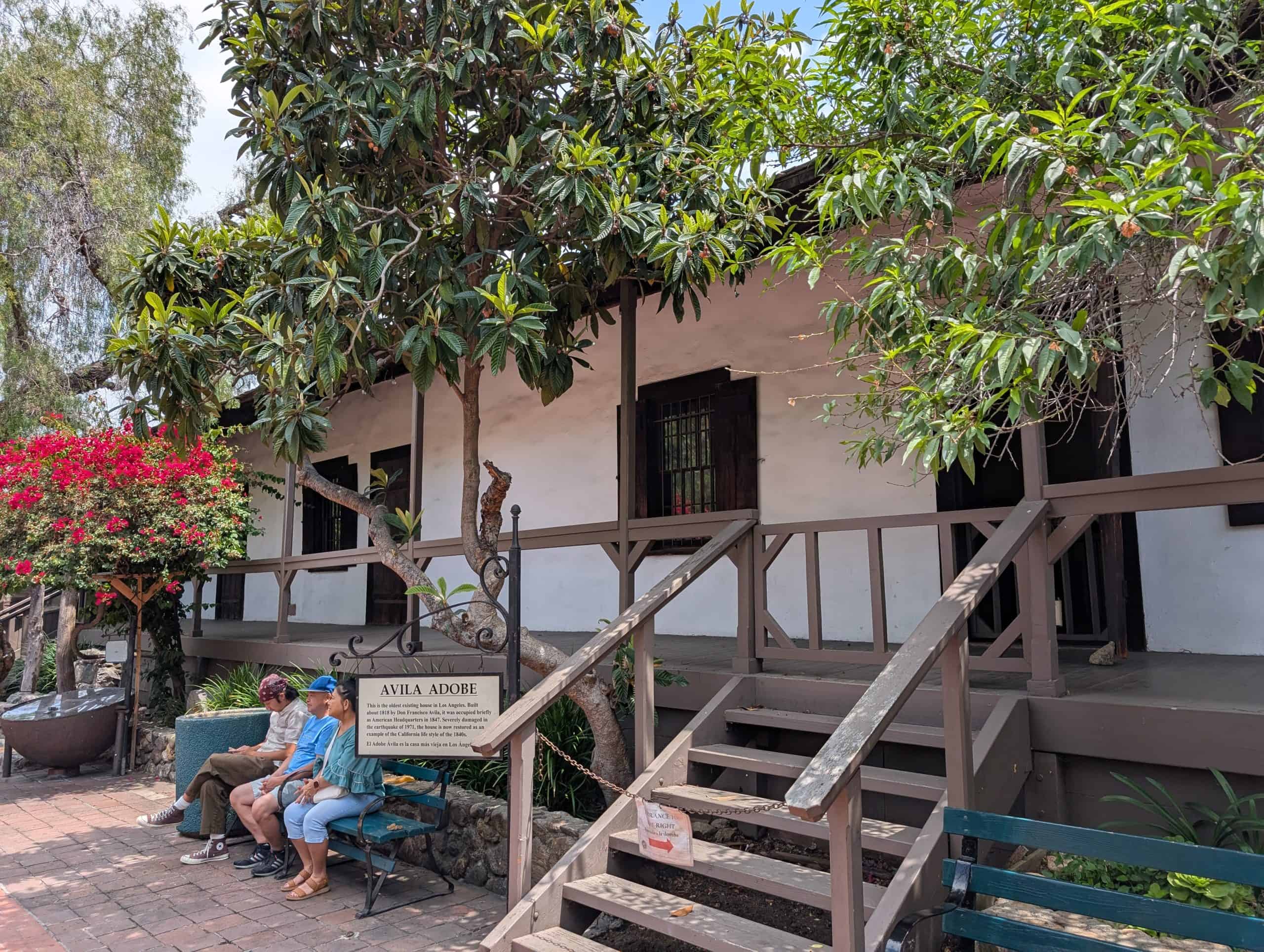
I was especially impressed by the Avila Adobe. Built in 1818, it is considered the oldest surviving house in Los Angeles. With modern Downtown buzzing just outside, stepping inside feels a little like traveling back in time.
A Little Piece of Mexico in Downtown LA
What I love about Olvera Street is its atmosphere. Sure, it’s touristy. Of course there are souvenirs. But at the same time, it feels wonderfully alive.
You hear music, smell delicious food, and meet people who aren’t simply rushing in for a quick photo before moving on.
Two older musicians have stayed in my memory in particular. During my first visits, they regularly wandered through the restaurants, stopping at tables to play for guests, who almost always slipped them a few dollars in tips.
Sometimes it seemed as though the entire room paused for a moment to listen. It’s those little moments that make Olvera Street feel less like a tourist attraction and more like a living part of the city.
Tacos, Horchata, and Mexican Traditions
My connection to Mexican culture actually began long before I moved to California. Around twenty years ago, I spent many vacations on the Yucatán Peninsula. I started out in the usual way, staying at all-inclusive resorts. But over time, I found myself drawn more and more to smaller hotels and guesthouses in ordinary Mexican neighborhoods.
I quickly noticed how much people appreciated it when visitors at least made an effort to speak Spanish. So I started learning the language. Not perfectly, but well enough for everyday conversations.
There was just one problem: I’d barely spoken Spanish in more than ten years.
Even now, the same thing happens to me all the time. I walk into a restaurant, cheerfully say, “Hola, ¿cómo estás?” and immediately get an enthusiastic reply in Spanish. From that point on, I usually understand only about half of what’s being said.
But I still love those encounters. They remind me every time just how closely Southern California is connected to Mexico, culturally as well as historically. And that’s why almost every visit to Olvera Street eventually leads me to something delicious.
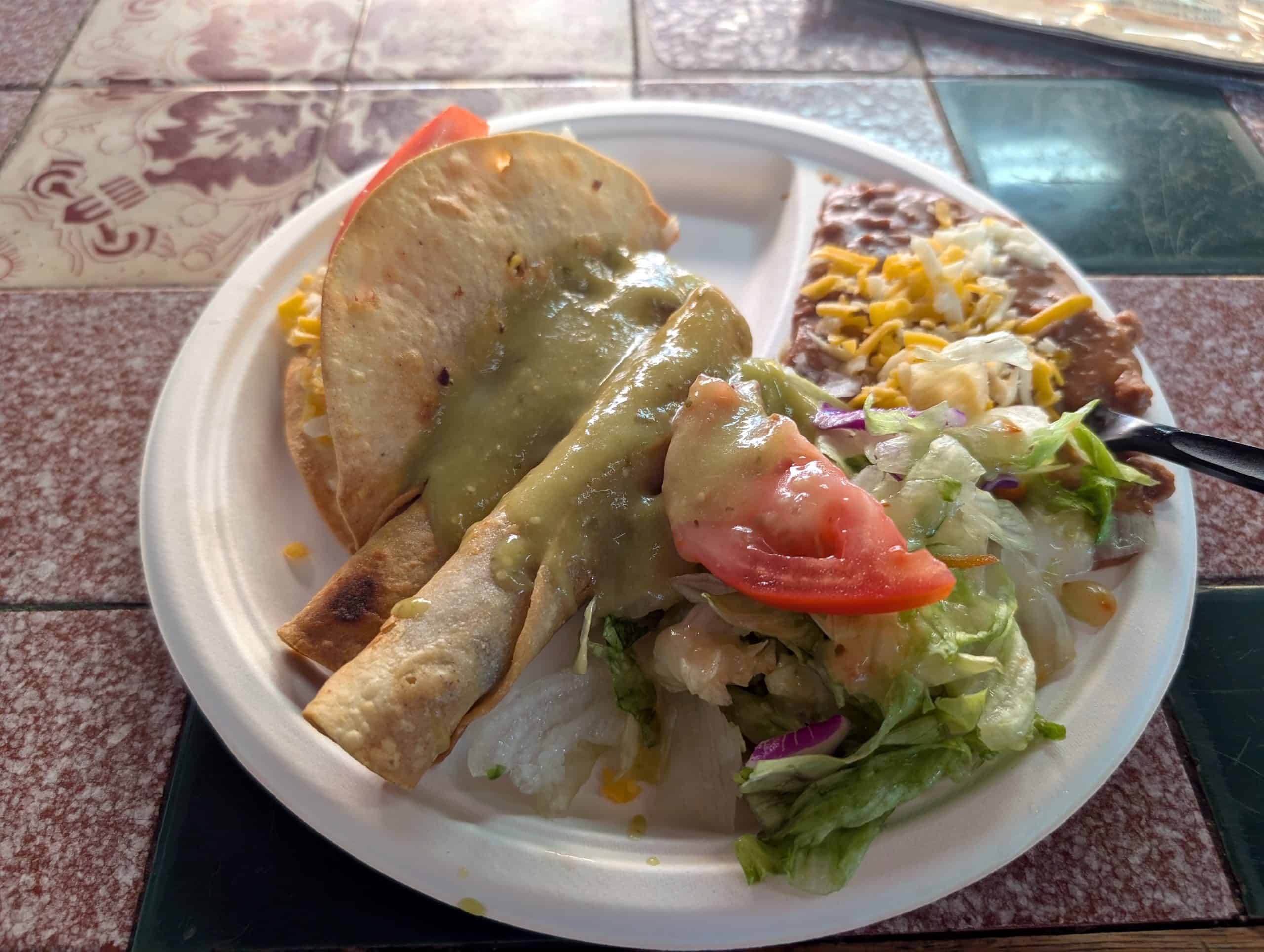
One of my personal favorites is the crispy tacos at Juanita’s Cafe. Not the overloaded Tex-Mex versions many Europeans are familiar with, but simple, fresh tacos packed with flavor. A horchata goes perfectly with them. That sweet rice drink has become almost as much a part of Southern California for me as palm trees, beaches, and sunsets.
Every visit to Olvera Street reminds me how deeply Mexico has shaped this region. Not as some minor footnote in a history book, but as a living part of everyday life.
Olvera Street – Where Past and Present Meet
Right by the Plaza stands Los Angeles’s old firehouse. Most visitors walk straight past it. I didn’t. As a fan of Bones, the building looked instantly familiar: In the pilot episode, FBI Agent Booth drops Dr. Brennan off right in front of the firehouse. The building doesn’t have a major role and is mostly in the background, but I recognized it immediately.
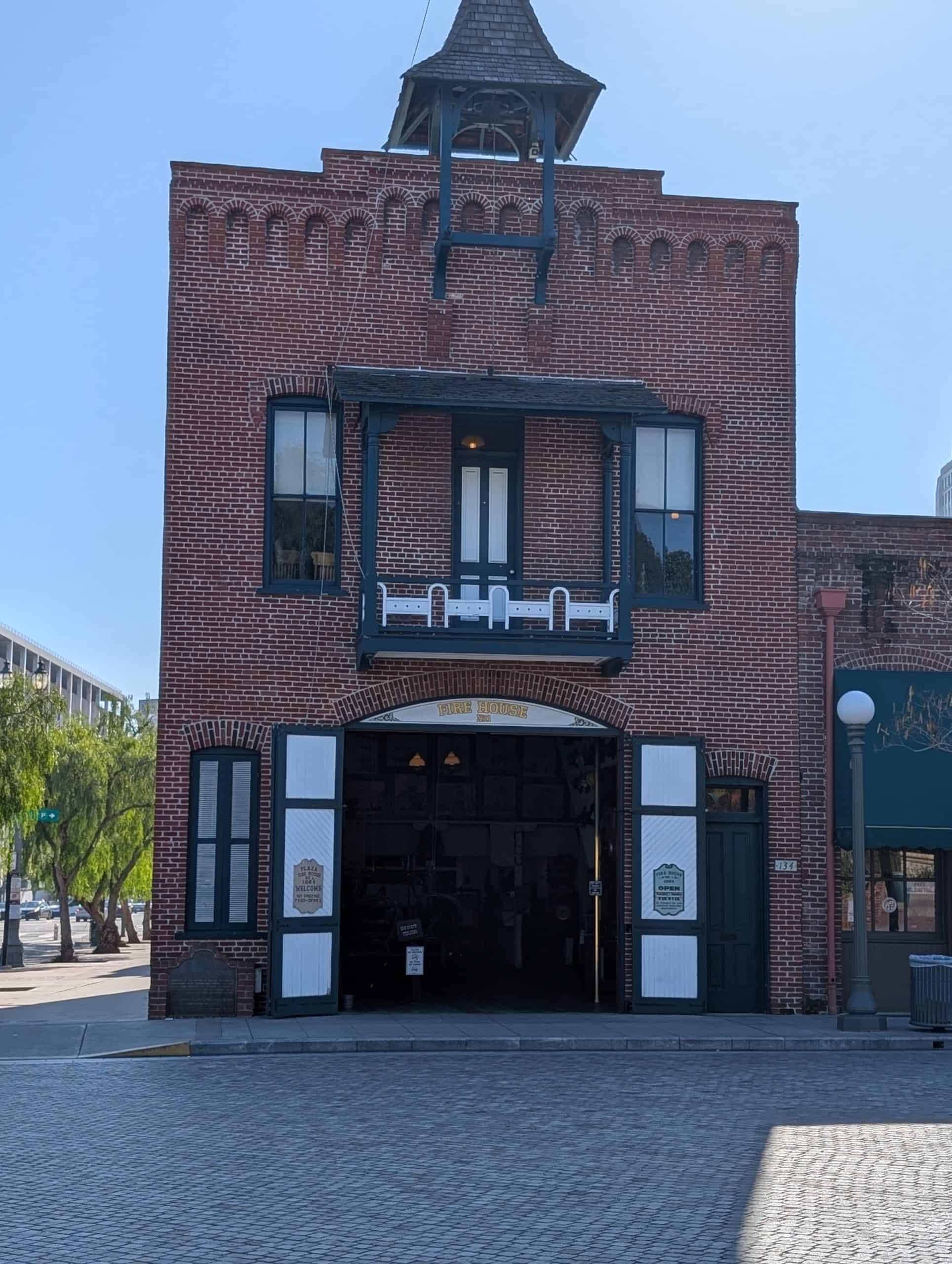
I realize I’m getting sidetracked again. But that’s one of the things I love most about Los Angeles. There seems to be another story waiting around every corner.
In my article “How to Avoid Being Disappointed by Los Angeles,” I write about how some of the best experiences here happen when you least expect them. Olvera Street is a perfect example of that.
All I really wanted to do that day was walk to Union Station. Instead, I found myself surrounded by Mexican music, historic buildings, and a culture that continues to shape so much of the city’s identity.
If you spend your whole visit checking attractions off a list, it’s easy to miss moments like these. Stay curious and take an unexpected turn now and then, and you’ll often discover the most interesting sides of Los Angeles. That’s exactly why I love this city. You set out to see one place and come back with five new stories.
And if you know Bones, you’ll recognize another part of the city, too. The Natural History Museum of Los Angeles County regularly appeared in the series as the exterior of the Jeffersonian Institute in Washington, D.C. Many of those shots were filmed from the Rose Garden side, behind the California Science Center.
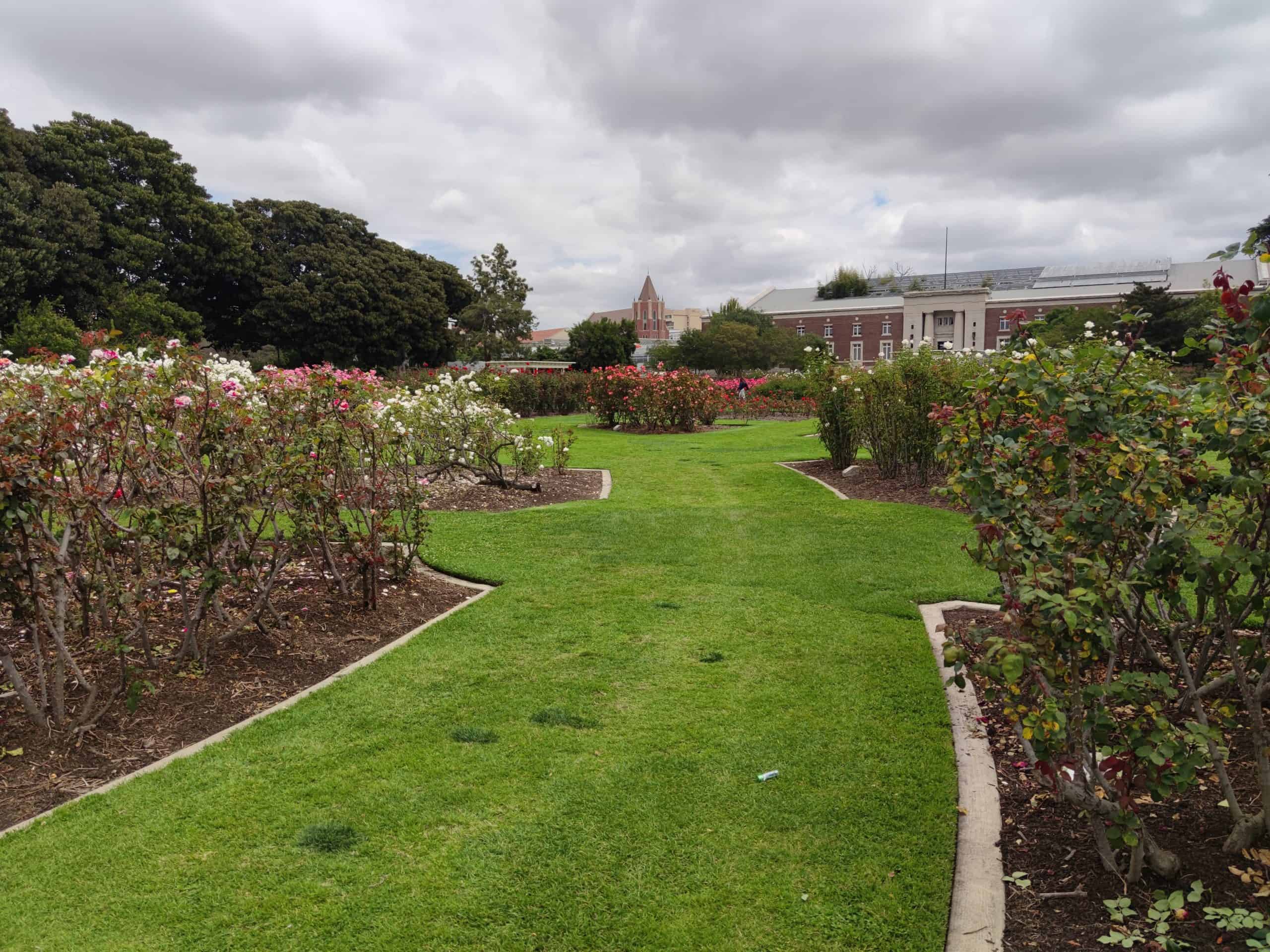
It’s these little discoveries that make Los Angeles so exciting to me. You’re walking through the city, and suddenly a place connects with a memory, a TV show, or a story.
Around Olvera Street, you’ll also find Union Station, Chinatown, and Downtown’s modern skyscrapers.
When the Plaza Comes Alive with Dancing
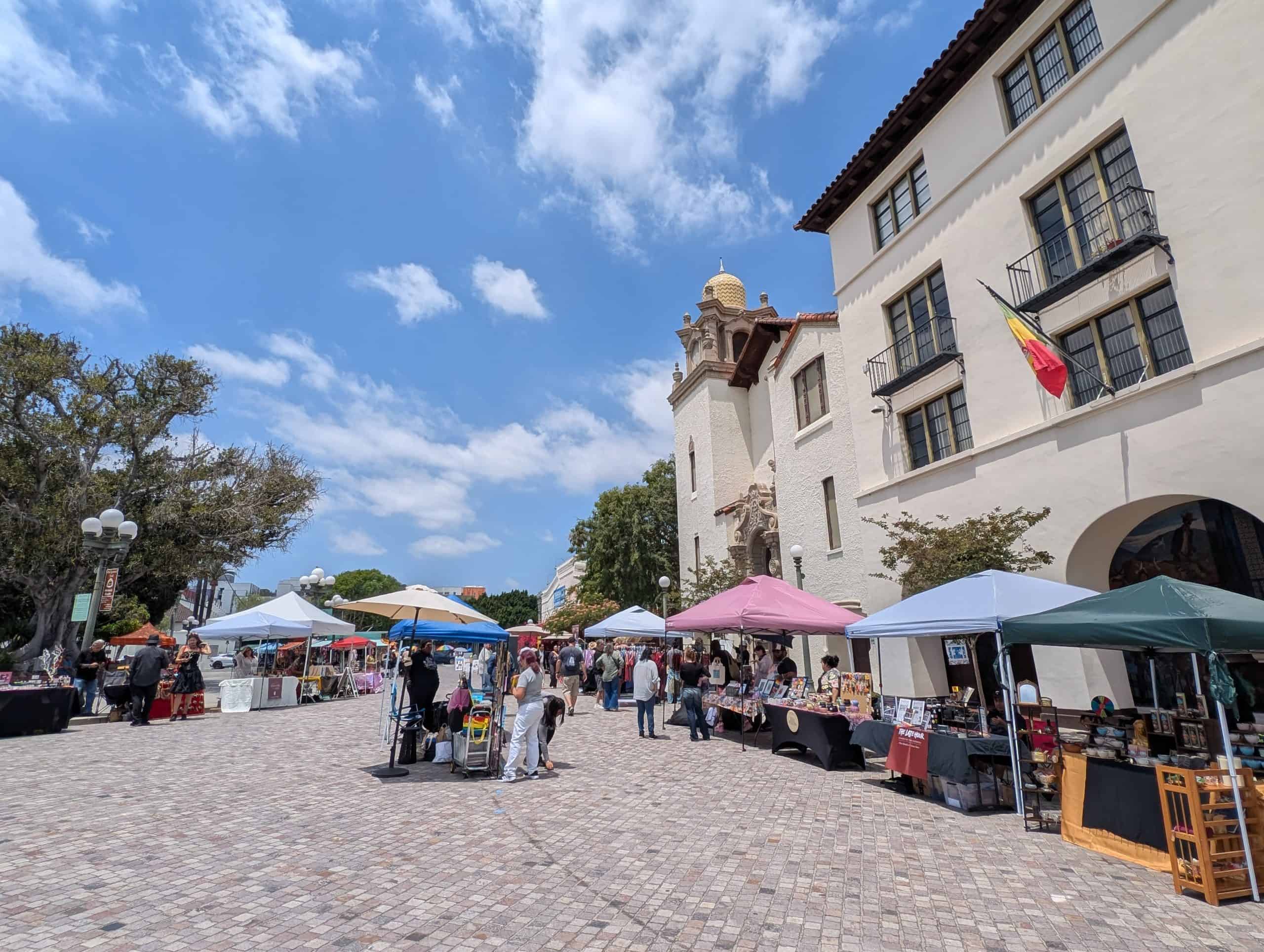
My favorite time to visit Olvera Street, though, is when people are dancing on the Plaza. Families, visitors, and locals come together. Music fills the square, people dance, and others simply watch or sit on a bench with a drink in hand.
Sometimes there are organized dances, sometimes karaoke, and sometimes it’s simply a great atmosphere.
At moments like these, Olvera Street doesn’t feel like a sightseeing attraction.
It feels like a gathering place. And that makes all the difference!
Why Olvera Street Is Worth Visiting
Olvera Street might not be the most spectacular attraction in the city.
There are no movie studios, no roller coasters, and no giant Hollywood letters.
Instead, you’ll find history, culture, music, and really good food.
If you truly want to understand this region, don’t limit yourself to Hollywood, Beverly Hills, or Santa Monica. The story of modern Los Angeles didn’t begin in any of those places.
It began here.
And maybe you’ll have the same experience I did: You only meant to stop by on your way to Union Station, and suddenly you’re staying much longer than you planned.
The best way to understand Los Angeles is to experience it! Discover the city’s highlights on my Best of Los Angeles Tour, or plan a day around your own interests with my Los Angeles Private Tour.
