
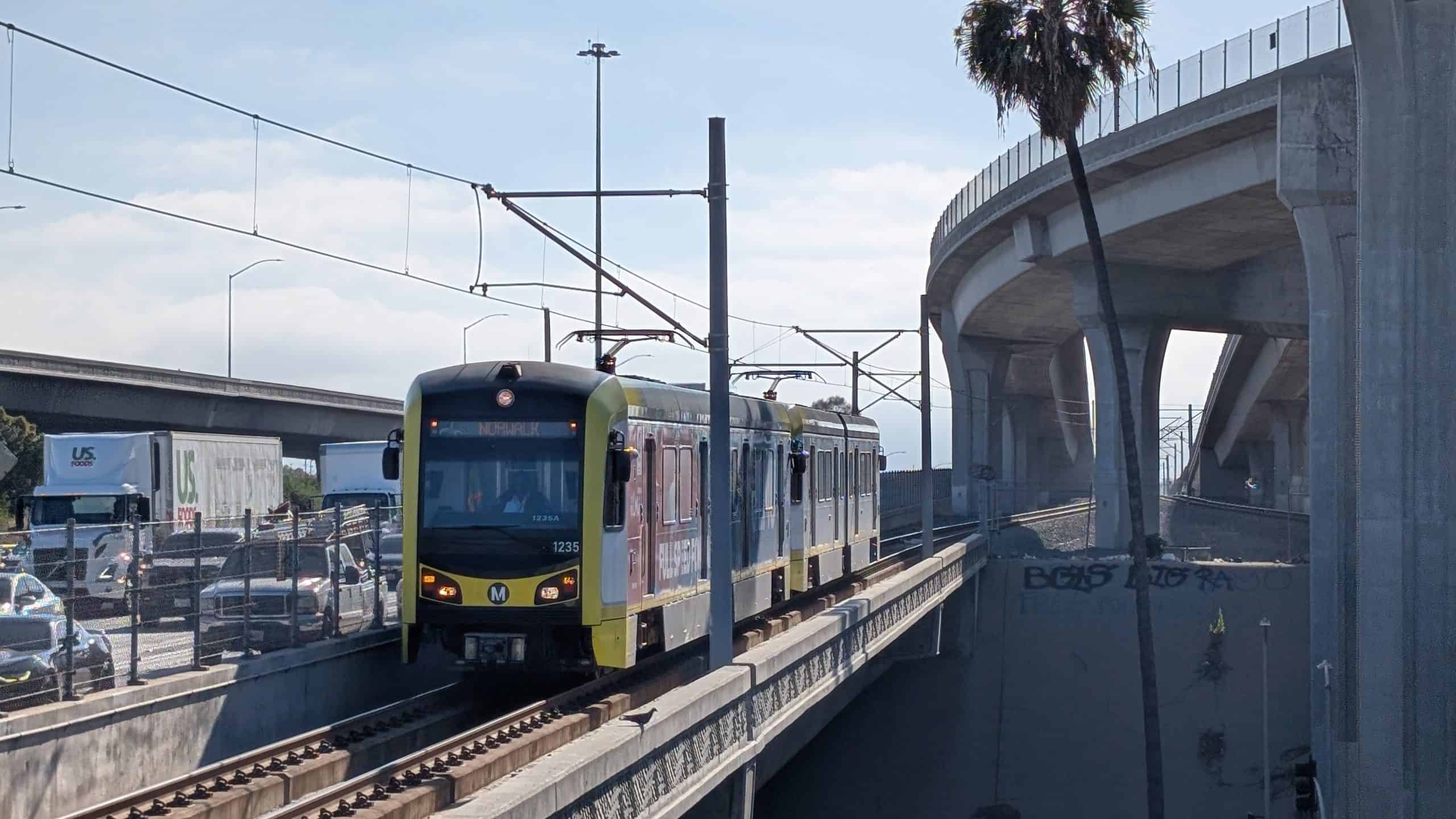
Why Public Transportation in LA Is Better Than Its Reputation
When I first visited Los Angeles, taking the Metro voluntarily never even crossed my mind. To me, LA meant freeways, rental cars, and traffic jams. Public transportation was something you used in New York, London, or Berlin.
That’s probably why public transportation in Los Angeles has surprised me more than almost anything else that’s changed here in recent years. These days, you can reach plenty of attractions and entire neighborhoods pretty comfortably by train and bus.
Let’s be realistic: LA is, and probably always will be, a car city. But that’s exactly why so many visitors are surprised to discover how many places you can now reach without getting behind the wheel.
Of course, Los Angeles isn’t New York, London, or Tokyo. You can’t just hop on the subway and expect to be everywhere in five minutes. The city is far too big and spread out for that. But once you give Metro, the buses, and the whole TAP system a chance, you’ll realize there’s a lot more to it than you might think. And it’s actually pretty straightforward.
Tickets and How to Pay for Public Transportation in Los Angeles
If you’d like to explore Los Angeles using public transportation, you have several options these days.
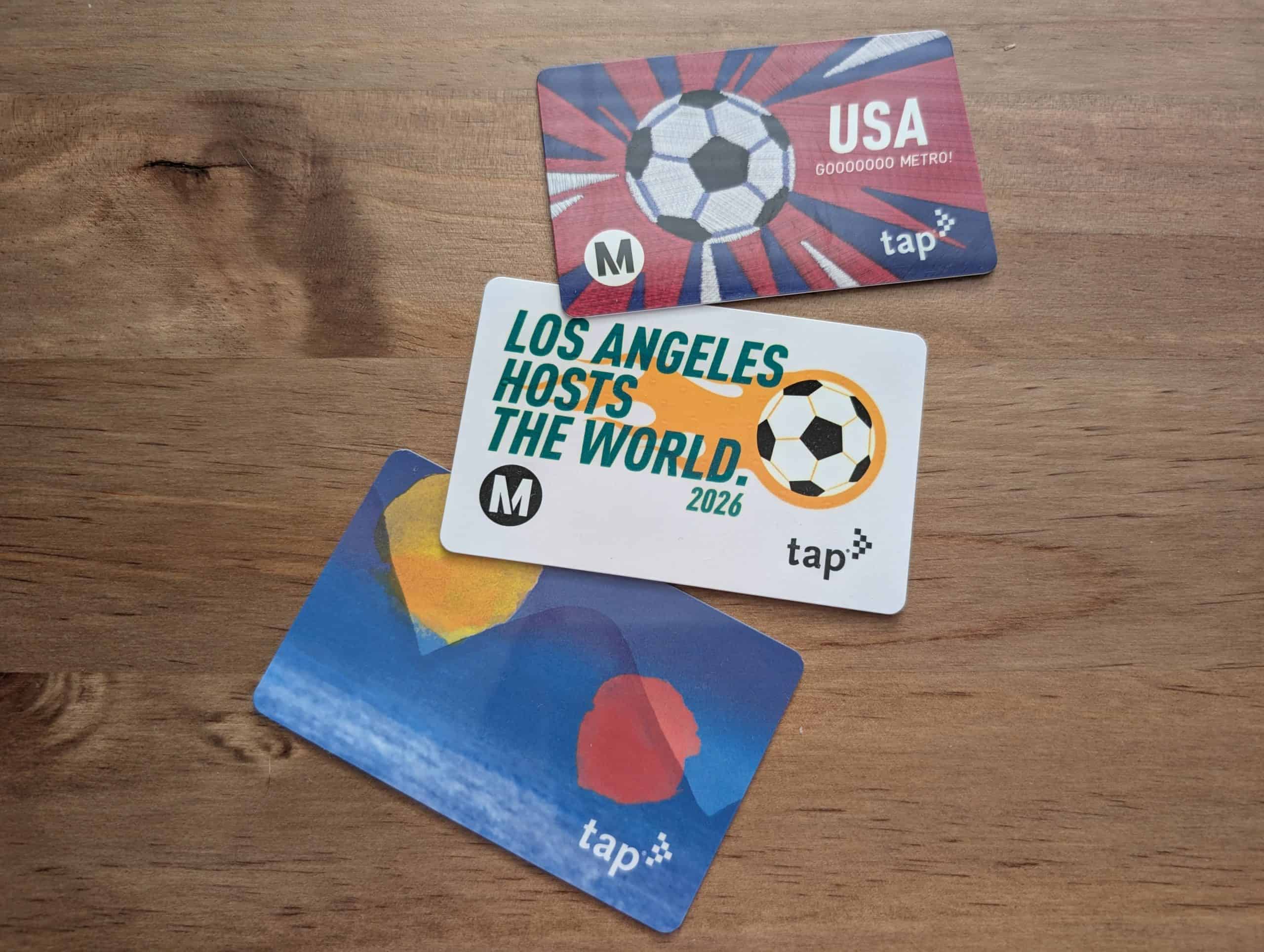
The traditional option is a TAP card. It works on Metro and numerous other transit systems throughout Greater Los Angeles. You can get a physical card or use a digital version on your phone, then add money at a ticket machine, through the app, or online.
Since late May 2026, you can also pay directly on Metro buses and trains with a contactless credit card, debit card, or smartphone. Just tap the reader and you’re on your way. For many international visitors, this is now the easiest option because there’s no need to buy a separate card or download another app.
If you also plan to ride with transit operators outside the Metro system, a TAP card is still a useful option. It’s accepted by participating agencies throughout the TAP network, making it something of an all-access key to getting around LA. Contactless bank-card payments are also available on many participating agencies, so check the operator’s current payment rules before you go.
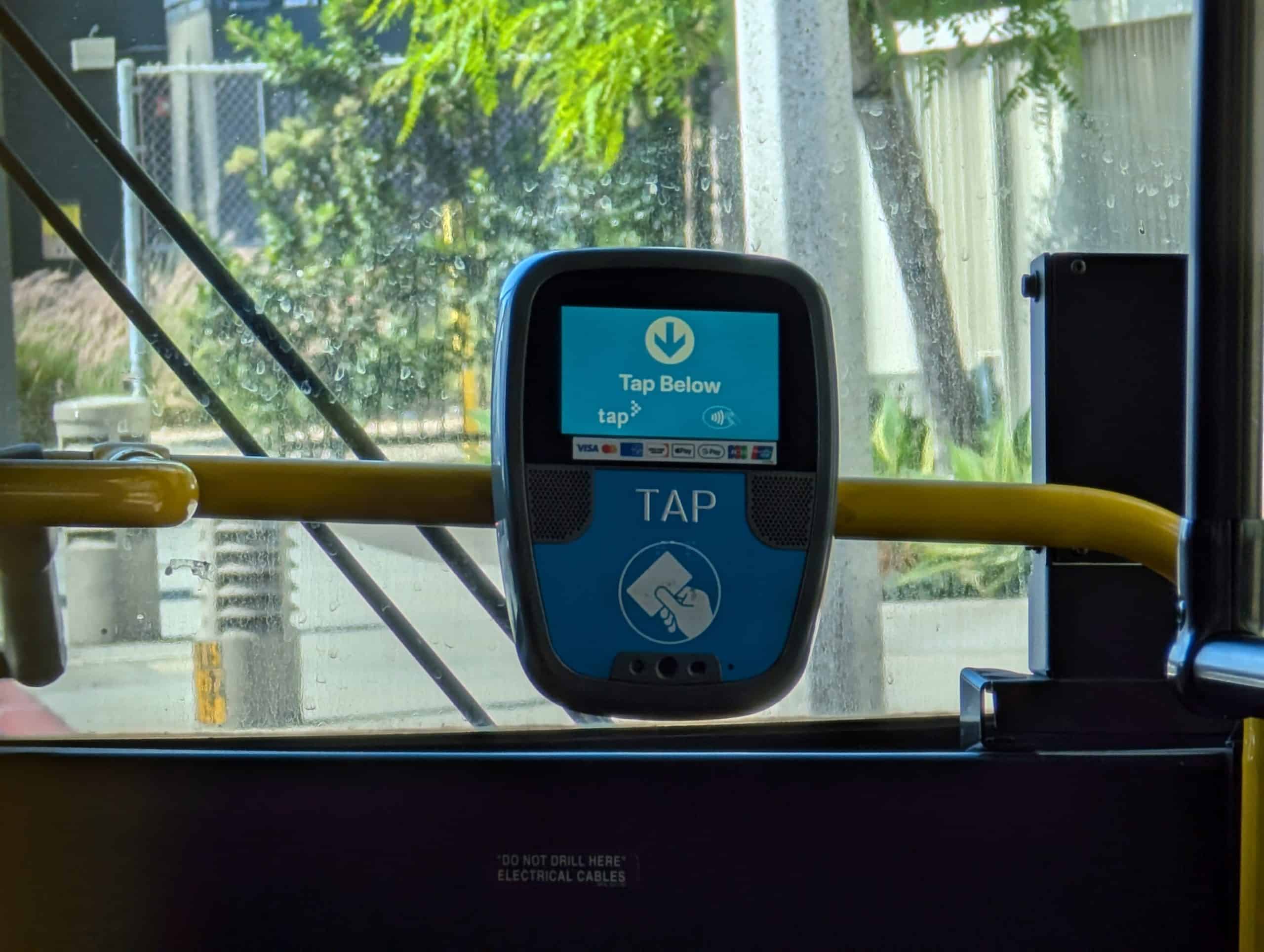
A regular Metro ride currently costs $1.75. Transfers within two hours are free, except for round trips, and fare capping keeps your spending to a maximum of $5 per day or $18 over seven days when you use the same eligible payment method.
Switching between different transit agencies can sometimes involve a small additional charge. Greater Los Angeles is made up of many independent cities and transit operators, each with its own services and rules. Fortunately, these extra charges are usually fairly modest.
And here’s perhaps the funniest part: Sometimes nobody pays anything at all. The card reader on a bus might be out of order, the driver might wave everyone aboard, or Metro might be running a special free-fare promotion. Very LA!
Where Can You Use a TAP Card?
Among others, you can use it on:
- Metro Rail
- Metro Bus
- Big Blue Bus
- DASH
- Culver CityBus
- Foothill Transit
- Torrance Transit
- Long Beach Transit
- GTrans
…and plenty of other transit systems across Los Angeles County. In total, the TAP network includes Metro and 26 additional participating transit agencies.
It might sound like an impossible maze of transit operators, but in practice it’s much easier than it looks.
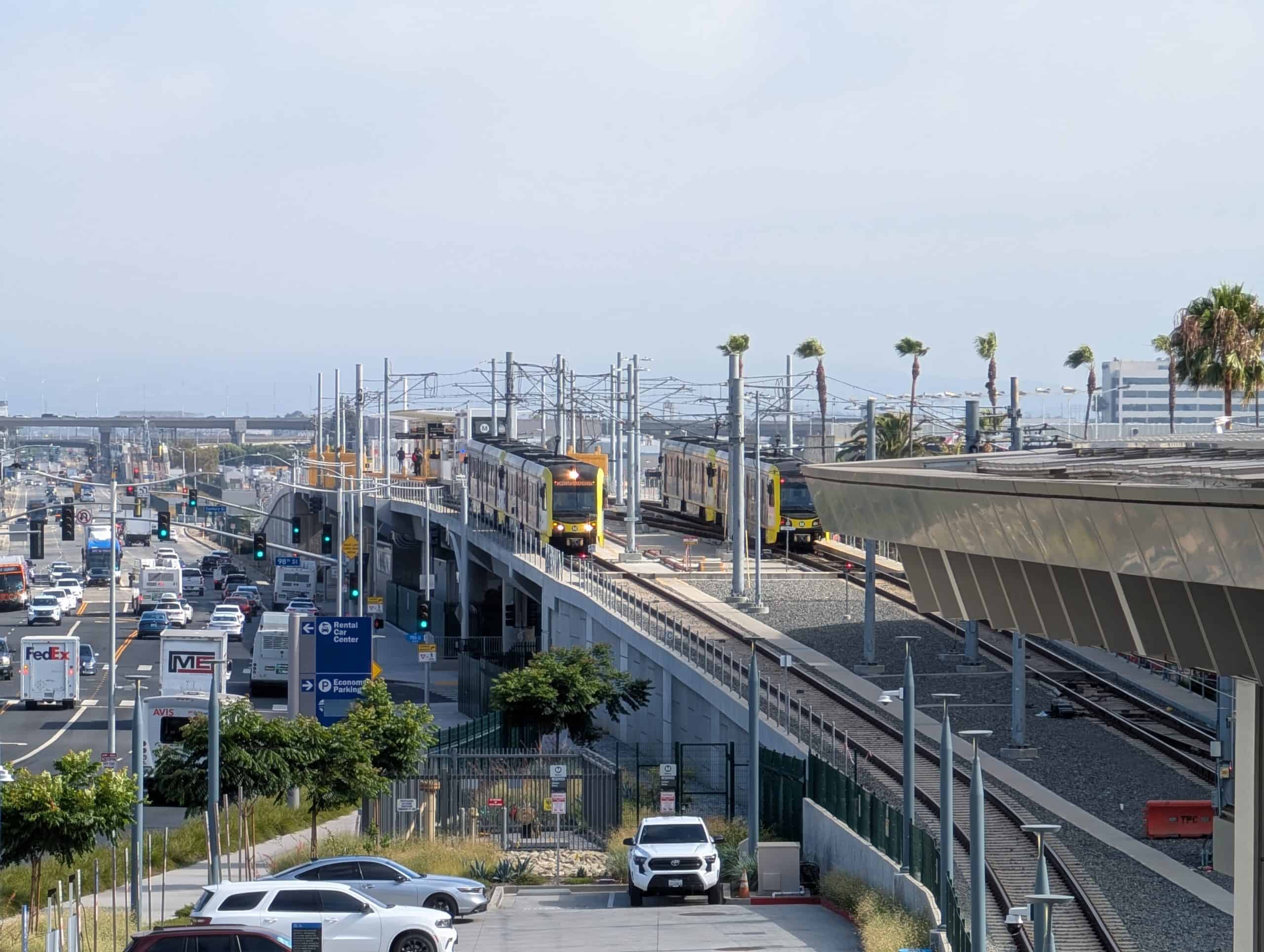
In a way, that variety reflects Greater Los Angeles perfectly. Visitors often think of LA as one single city, but the region is actually made up of numerous independent cities and communities, including Santa Monica, Long Beach, Pasadena, Culver City, and Torrance. Each has its own personality, and some even have their own transit system.
That’s part of why Los Angeles can feel less like one city and more like an enormous patchwork of different worlds that have gradually grown together.
Surprisingly Quiet and Relaxed
Something else that surprises many visitors is how uncrowded the buses and trains can be compared with public transportation in Europe. Of course, there are busy routes and rush-hour crowds. But plenty of people in Los Angeles still drive everywhere.
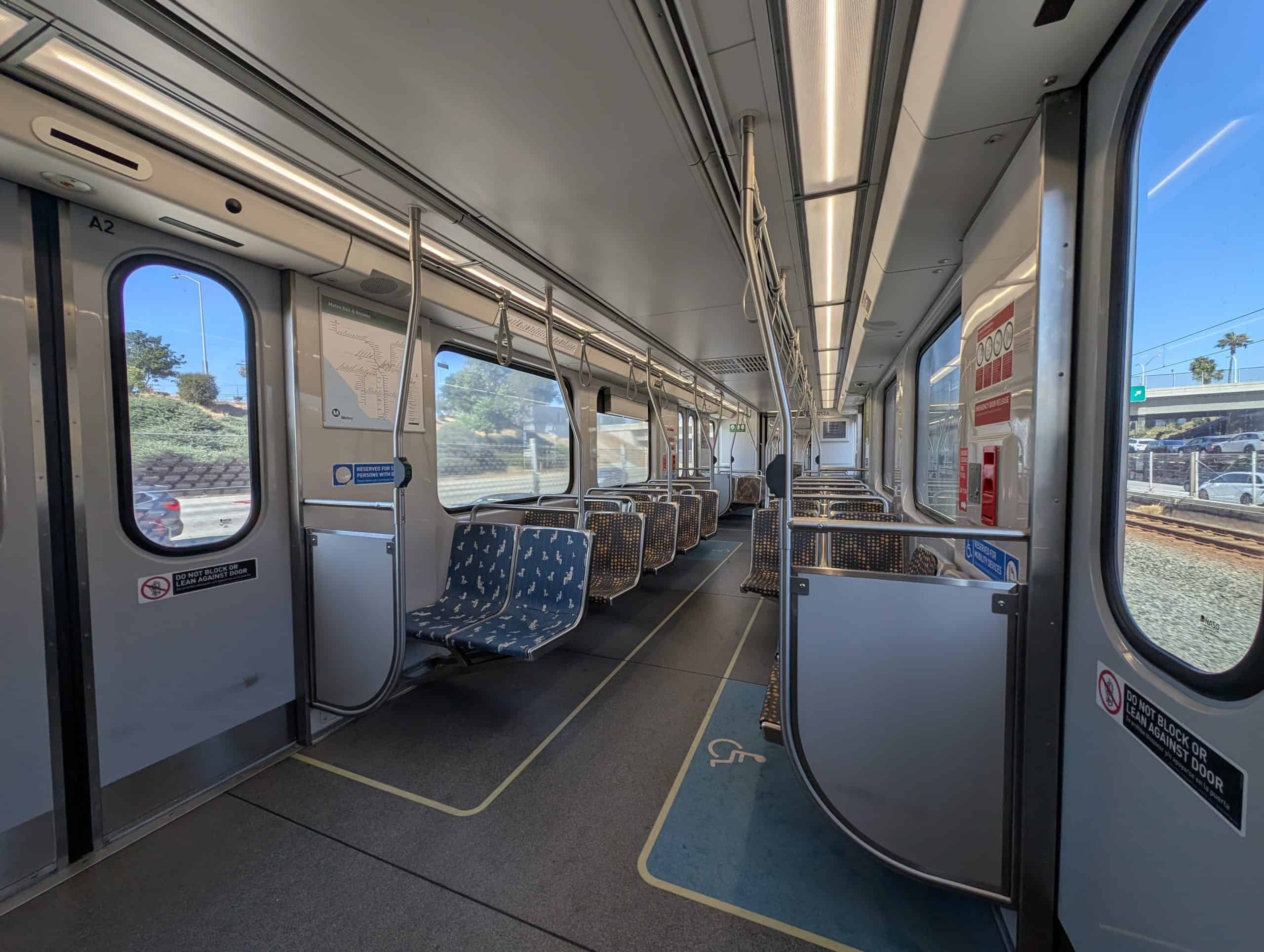
That means riding Metro can sometimes feel more relaxed than taking transit in a major European city: more room, fewer elbows, and often a surprisingly peaceful ride. You’re sitting there comfortably while traffic outside crawls along the freeway.
When Does Taking Metro or the Bus Make Sense?
Many visitors have one main question: Is public transportation in Los Angeles actually worth using?
The answer is: Sometimes yes, sometimes no.
For a classic California road trip with stops in Malibu, the mountains, or several far-flung places in one day, a rental car is usually the better choice. But if you’re spending a few days in Los Angeles and focusing on particular neighborhoods, Metro and buses can take you to a surprising number of places.
Public transportation works particularly well between Downtown and Santa Monica, for trips to Hollywood and Universal Studios, visits to Pasadena, or getting to Griffith Observatory. On routes where drivers regularly sit in traffic, taking Metro can actually be the less stressful option.
The Most Interesting Metro Lines for Visitors
The E Line is probably one of the most enjoyable routes for visitors. You start amid the high-rises, traffic, and typical Downtown chaos, then suddenly find yourself in Santa Monica, just a short walk from the ocean. First concrete, then palm trees, and before you know it, salty air and people cruising past on bikes. Very SoCal!
The B Line, meanwhile, is your gateway to the Valley. If you’re heading toward Hollywood, Universal City, Studio City, or North Hollywood, chances are you’ll end up on it. And the change of scenery between Hollywood and the Valley is an experience in itself.
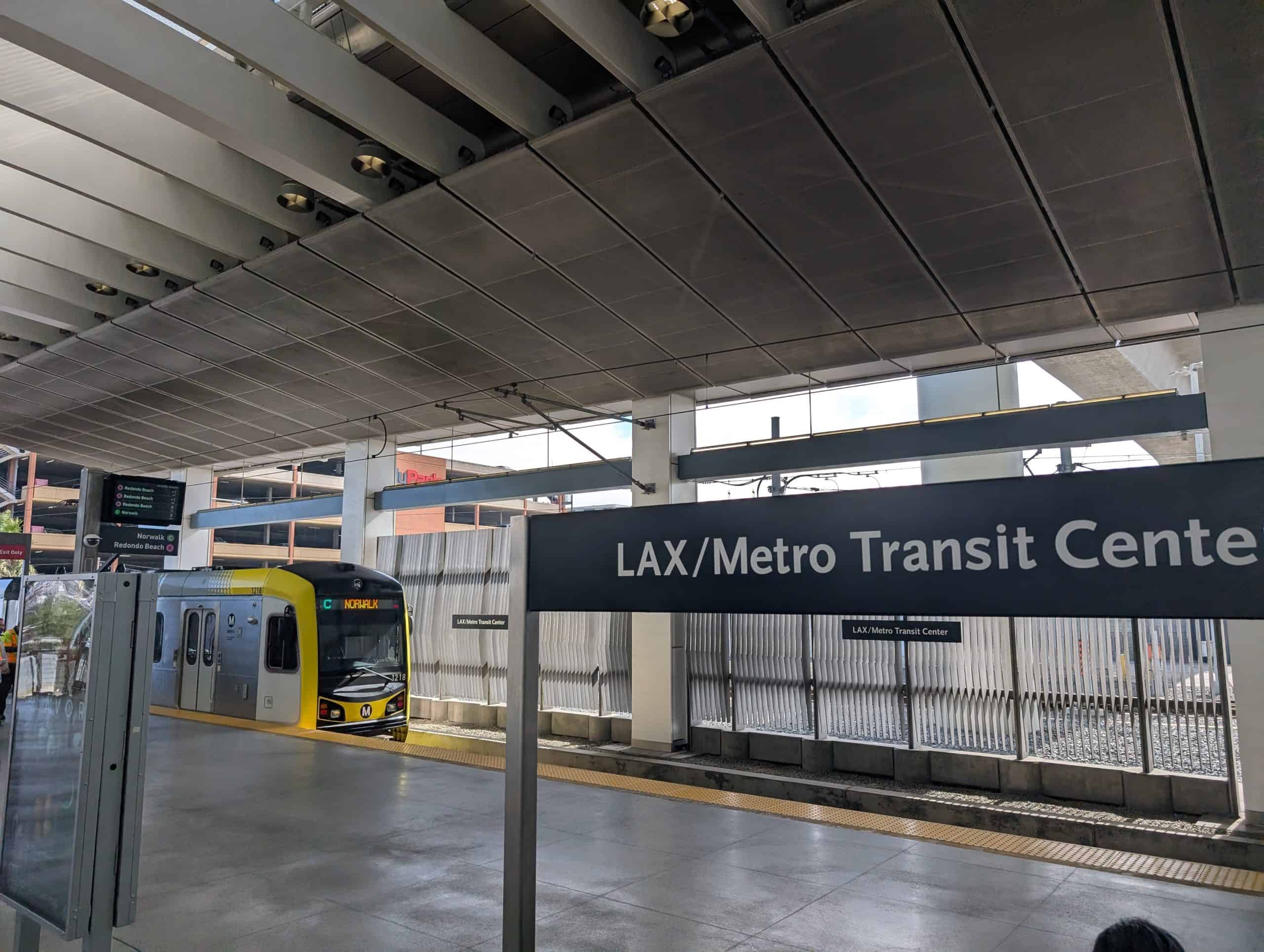
The K Line is one of the most interesting parts of Metro’s growing rail network. It serves the Crenshaw and Inglewood areas and connects toward the airport region. The planned SkyLink automated people mover will eventually link the LAX/Metro Transit Center directly with the airport terminals. For Los Angeles, that will be a pretty big deal. Passenger service isn’t expected before February 2027, and an official opening date has not yet been confirmed.
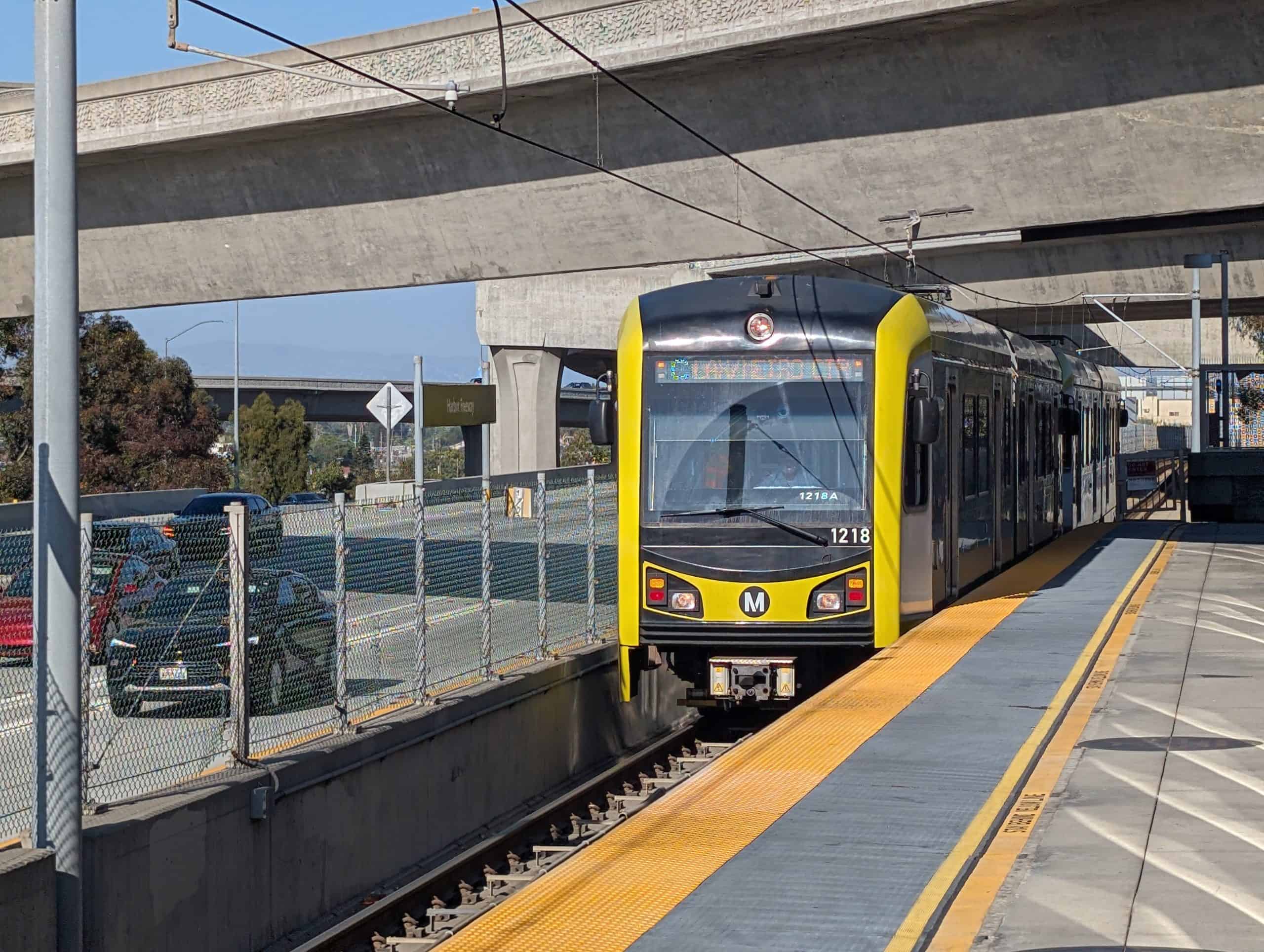
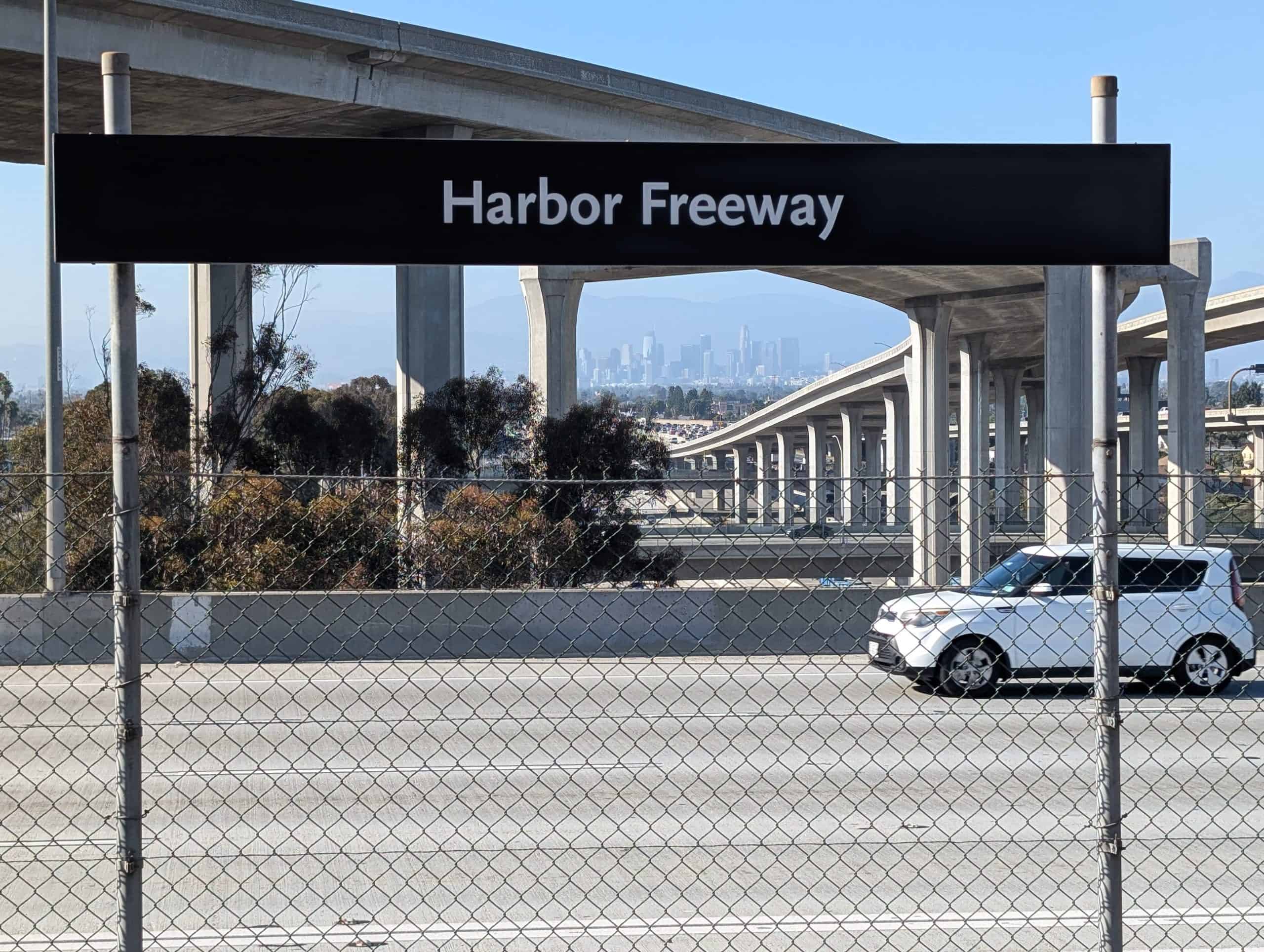
One of LA’s strangest public-transit sights is the C Line running alongside the 105 Freeway. Some stations are right in the middle of the freeway, between lanes of speeding traffic. Cars rush past on both sides, and in the middle of it all is a train platform. Peak LA.
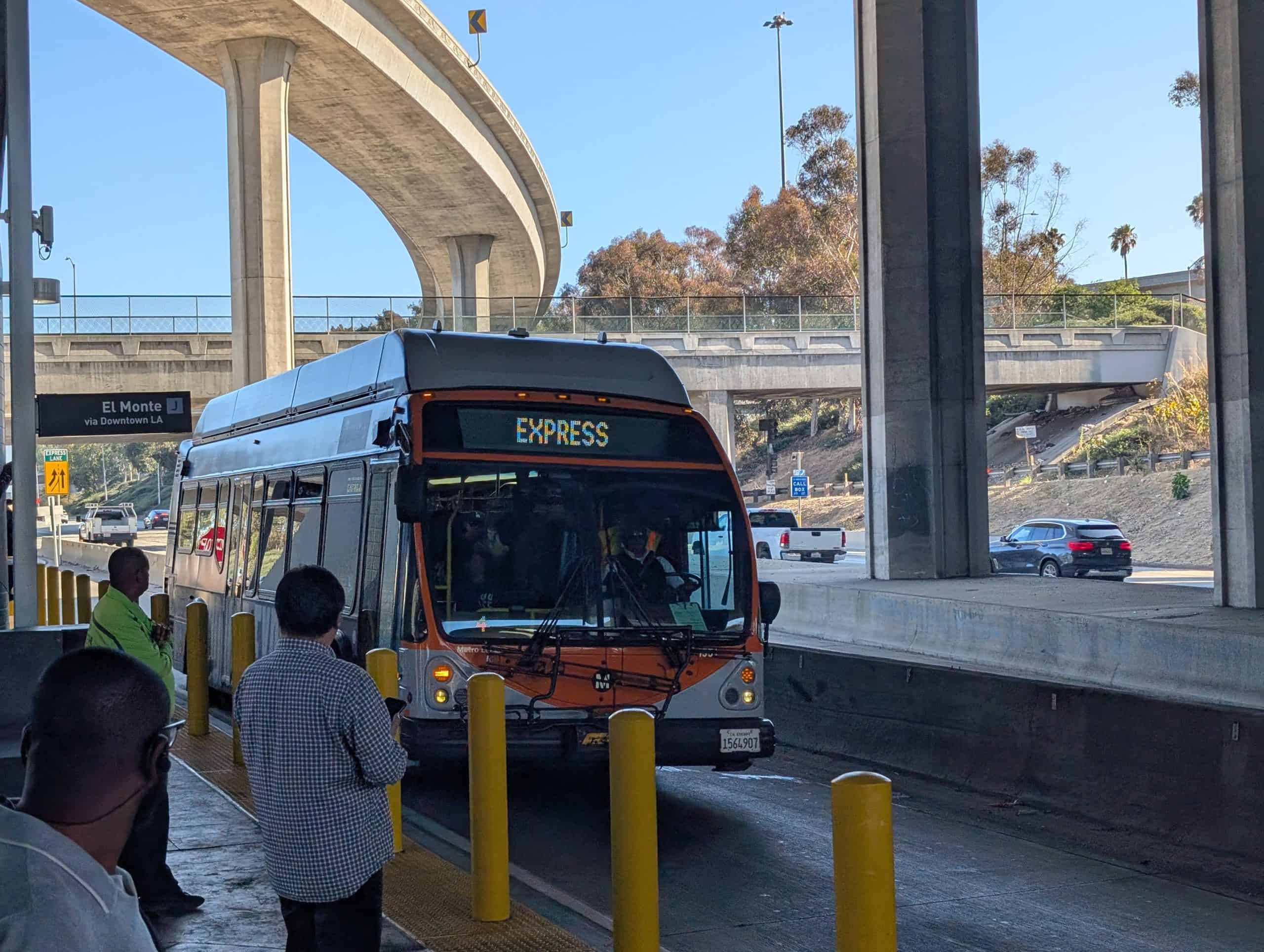
The J Line is pretty unusual, too. Its buses use dedicated lanes along parts of the freeway, which can make them surprisingly efficient. Taking a bus down the middle of a freeway sounds odd, but it actually works.
South Bay, Pasadena, and Long Beach
Most visitors automatically focus on Hollywood, Beverly Hills, or Santa Monica. Meanwhile, the South Bay gets overlooked far too often.
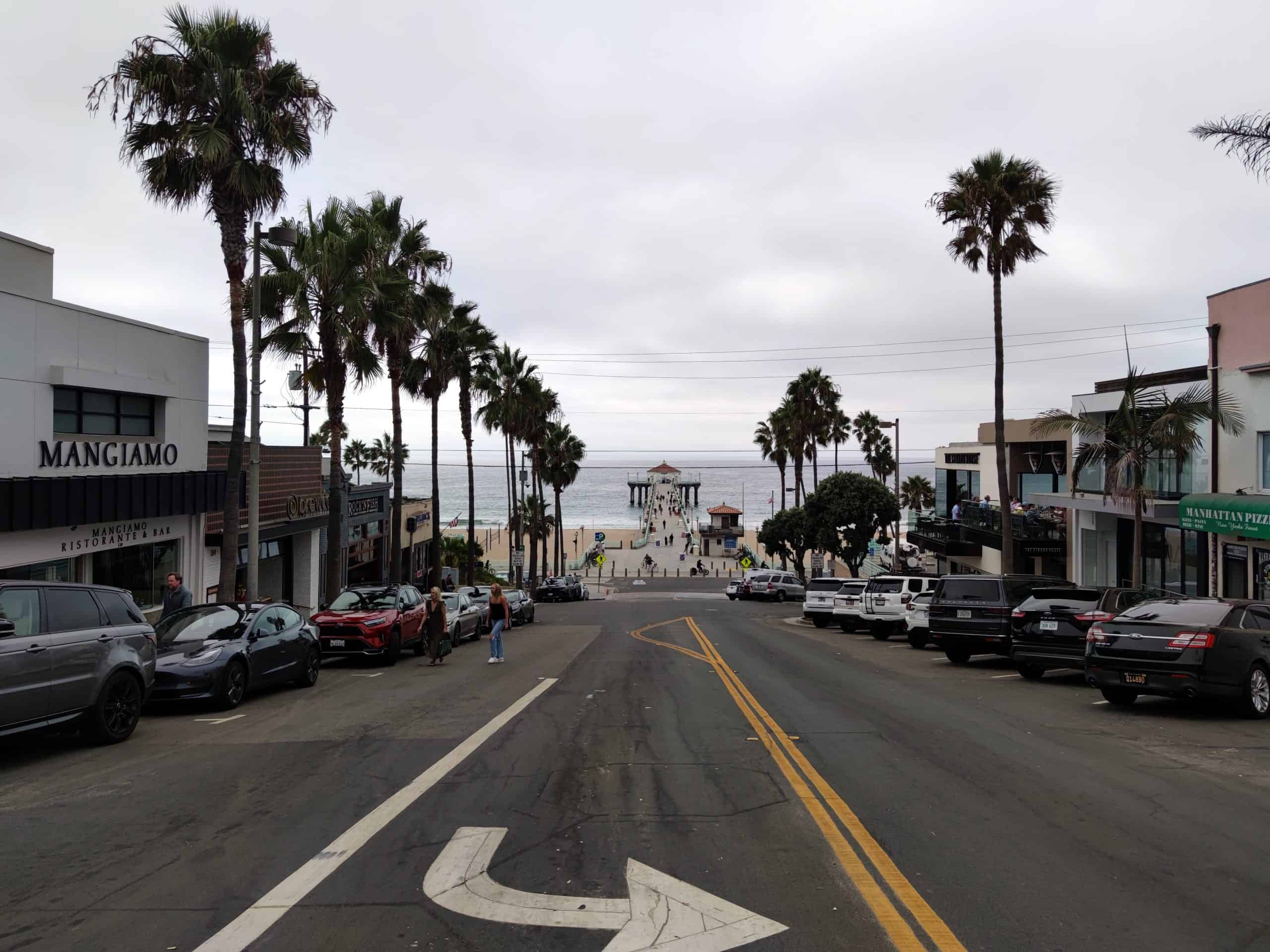
The combination of the J, C, and K Lines makes parts of the region much easier to reach than they used to be. Getting toward Manhattan Beach, Hermosa Beach, or Redondo Beach may still involve a connecting bus or a bit of walking, but a relaxed beach day without a car is more realistic than many people expect.
And really, an afternoon in Hermosa Beach or Manhattan Beach can feel a lot more like the real Southern California than yet another Hollywood souvenir shop.
Then there’s the A Line, which is an absolute beast. It’s one of the longest light-rail lines in North America, running from inland Pomona through Pasadena, Downtown LA, and South Los Angeles all the way to Long Beach on the Pacific.
Fun fact: The full A Line runs about 58 miles (93 kilometers). No wonder riding it can feel like a miniature road trip on rails.
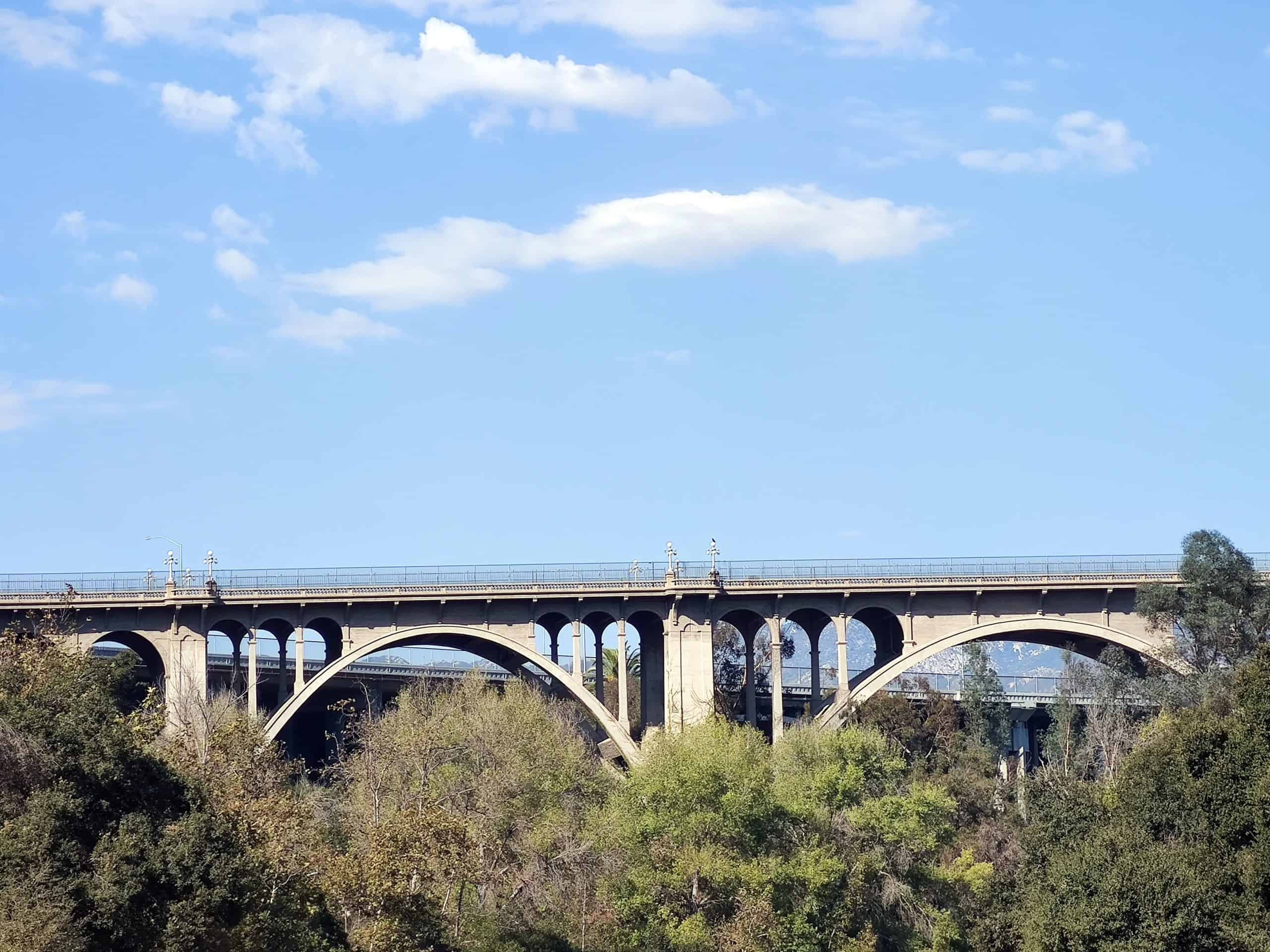
Old Pasadena, by the way, is perfect for a leisurely stroll, a good meal, and a slightly different LA vibe.
Big Blue Bus and DASH – More Ways to Get Around LA
If you’re exploring Santa Monica, Westwood, or Century City, you’ll soon notice the blue buses operated by Big Blue Bus. Many visitors are surprised by how comfortable and easygoing they can be.
DASH buses, meanwhile, work like small local shuttle systems for particular neighborhoods and shorter trips. One especially handy option is reaching Griffith Observatory using Metro and the DASH Observatory Shuttle. That’s often much less stressful than hunting for parking up there.
Safety and the Reality of Riding Metro
Of course, we should talk about this too: Public transportation in LA isn’t perfect. Some stations are more modern than others, and some areas feel more comfortable than others.
As in any big city, it’s smart to stay a little more alert in the evening and at night. Keep an eye on what’s happening around you, especially if a situation starts to feel tense. If something doesn’t feel right, you can get off at the next station and move to a different car or wait for the next train. The same common-sense approach you’d use in other major cities applies here.
During the day, especially on popular visitor routes, the system is generally quite usable as long as you bring a little big-city awareness and common sense.
Final Thoughts
Yes, Los Angeles is still a car city!
But if you give Metro and the buses a chance, you may discover a completely different side of LA. Not just the attractions, but the journeys, the neighborhoods, everyday life, unexpected little moments, and those unmistakable SoCal experiences somewhere between Downtown, the beach, and the Valley.
And honestly? That’s kinda the good part.
The best way to understand Los Angeles is to experience it! Discover the city’s highlights on my Best of Los Angeles Tour, or plan a day that’s entirely your own with the Los Angeles Private Tour.
