
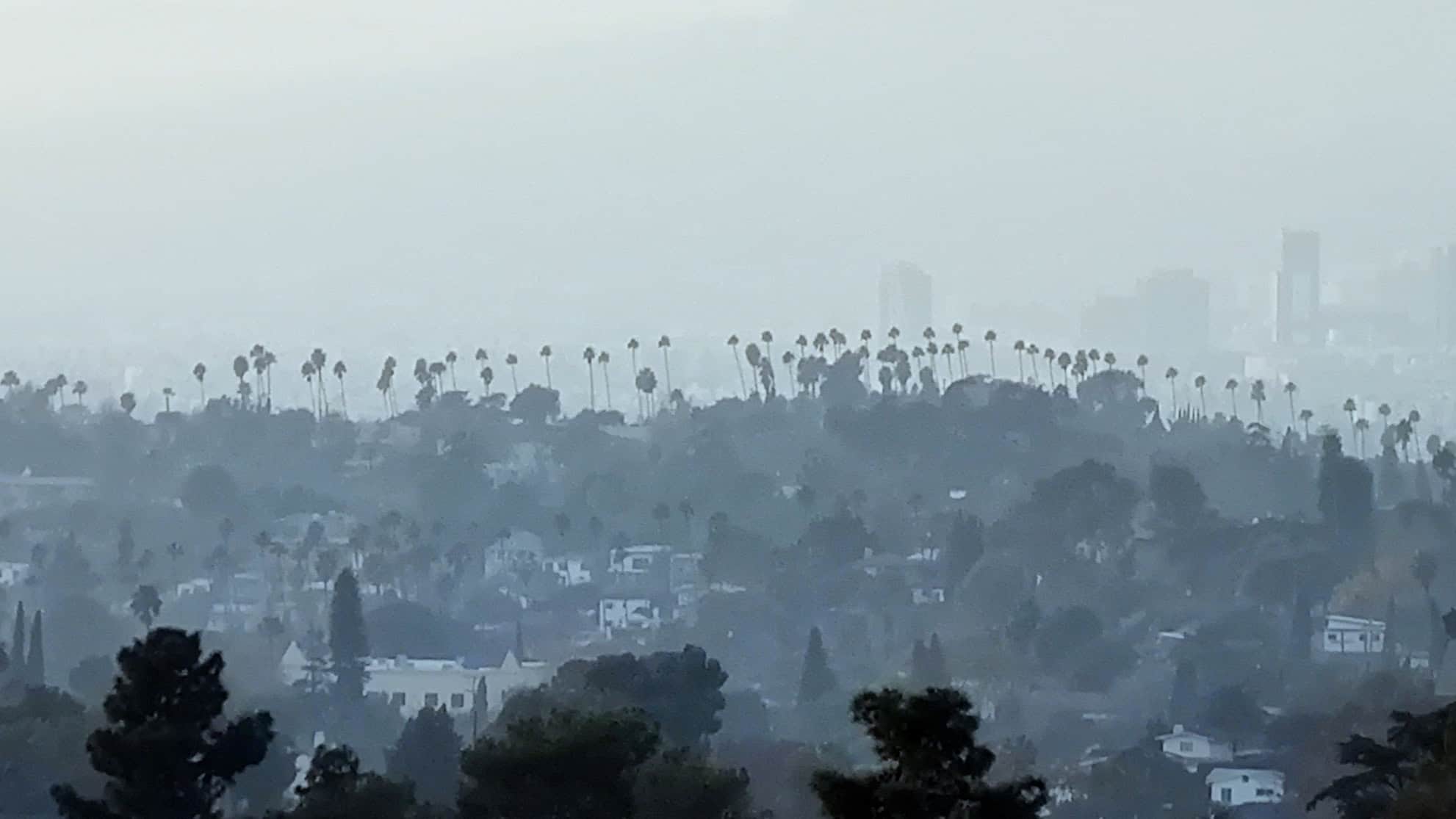
When you arrive in Los Angeles for the first time, something almost inevitable happens. Before you’ve even found your bearings, before you know where Hollywood is or just how enormous this city really is, you notice them: the palm trees. Palm trees in Los Angeles are among the city’s most recognizable symbols, shaping that first impression like almost nothing else.
It was the same for me. Of course, I’d seen them in movies, music videos, travel guides, and countless photos. But then one day you’re actually standing on a street in Los Angeles, looking up, and realizing those palms really are everywhere. Along wide boulevards, in front of houses, next to gas stations, in parking lots, and at the beach. Suddenly they stop feeling like a cliché and start feeling like part of the city.
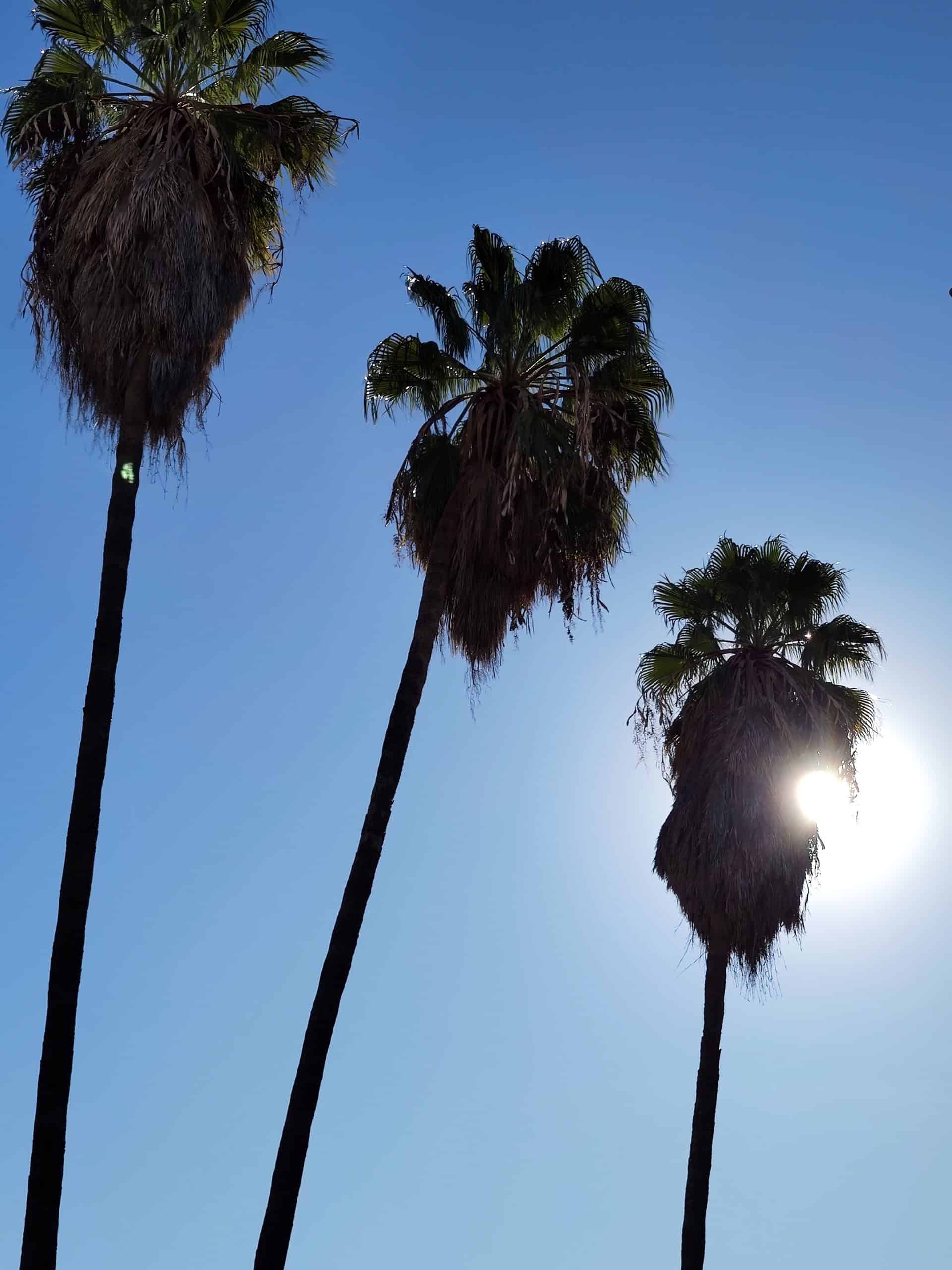
And that’s exactly why, for so many people, they’re now inseparable from the image of Los Angeles.
Palm Trees and the California Dream
Here’s something that surprises many visitors: most of the palm species you see in Los Angeles aren’t native to the area. Only one palm species is native to California: the California fan palm. Its natural habitat, though, is in the desert oases of southeastern California.
Many were deliberately brought here, with huge numbers planted during the 1920s and 1930s. Back then, Los Angeles was reinventing itself. The city was growing rapidly, Hollywood was becoming the world’s dream factory, and California was turning into a symbol of fresh starts and new opportunities.
Los Angeles wanted to be more than just another city in the American West. City leaders dreamed of a modern metropolis full of sunshine, optimism, and promise. Palm trees fit the picture perfectly. They looked exotic and elegant, capturing exactly the Southern California lifestyle the city wanted to project. Never mind that the climate here is really more Mediterranean than tropical.
But images were powerful even then. And nothing sold the dream quite like a long row of palm trees against a blue sky.
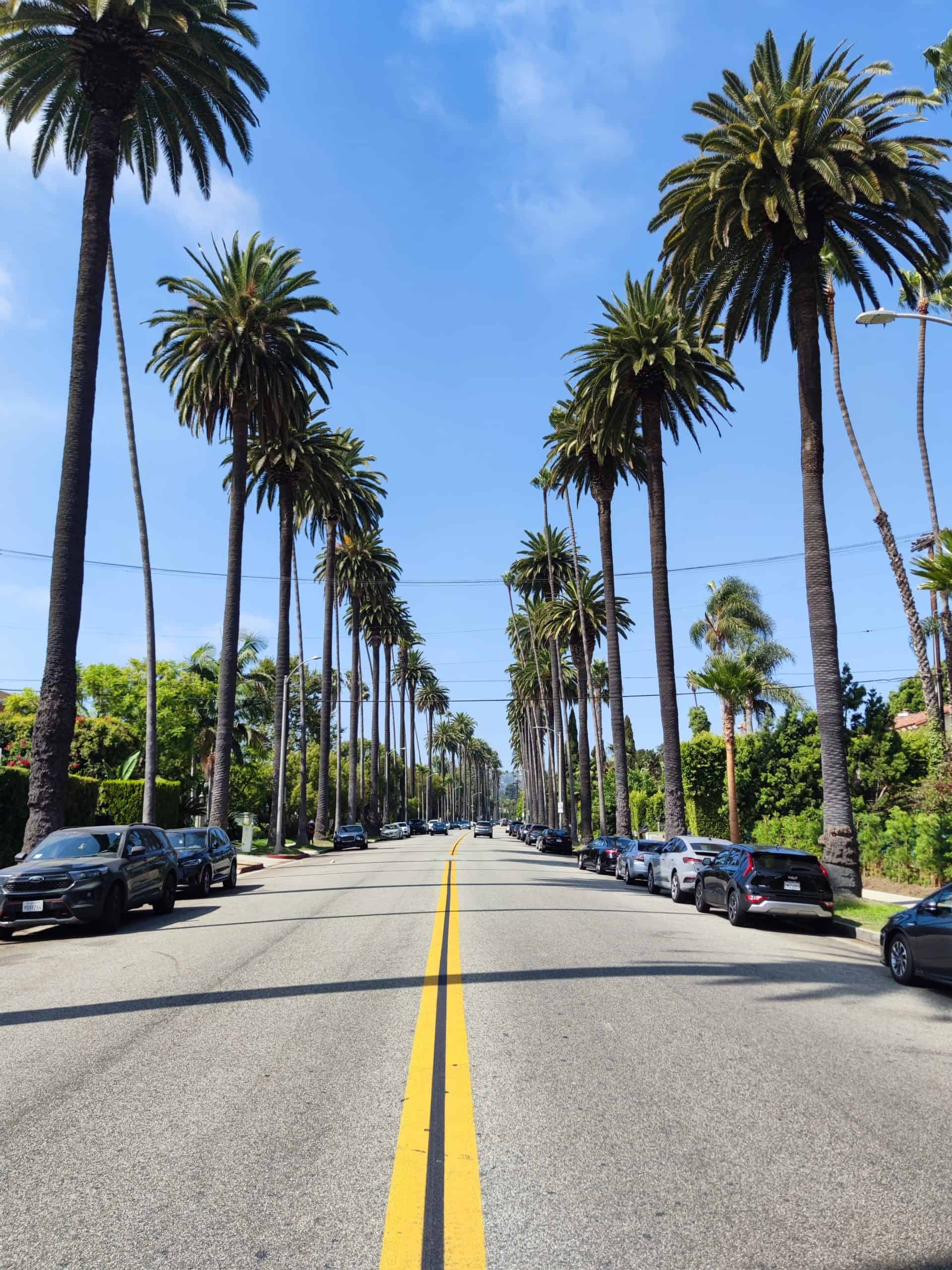
Especially around Sunset Boulevard and in Beverly Hills, palms became a deliberate part of the scenery, almost a ready-made movie set for the growing film industry. Hollywood understood the power of a good image early on. And palm trees worked. On screen, and later on postcards, album covers, advertisements, and travel brochures.
Even today, a single palm tree in a photo is often enough to make people think of California.
Why Palm Trees Fit Los Angeles So Well
Back in Germany, I mostly associated palm trees with tropical beaches, resorts, and faraway vacations.
In Los Angeles, though, they pop up in places you might never expect: outside fast-food restaurants, next to car washes, along busy multi-lane roads, and right in the middle of residential neighborhoods. That contrast is part of their charm.

They suggest relaxation and vacation vibes, even when they’re surrounded by heavy traffic, busy streets, and everyday big-city life. Maybe that’s why they fit Los Angeles so well. After all, this city thrives on contrasts. Glamour and ordinary life. Luxury and improvisation. Hollywood dreams and a sprawling metropolis.
Somehow, the palms seem completely at ease with all those contradictions.
Elysian Park – Where Palm Trees Become Part of the View
One place where I feel that especially strongly is Elysian Park.
From up here, you can look out across the city while individual palm trees stand silhouetted against the sky. In the late afternoon or just before sunset, the scene can feel almost surreal. Below you stretches one of the largest metropolitan areas in the United States. In front of you are palm trees that look as though they belong on a tropical beach.
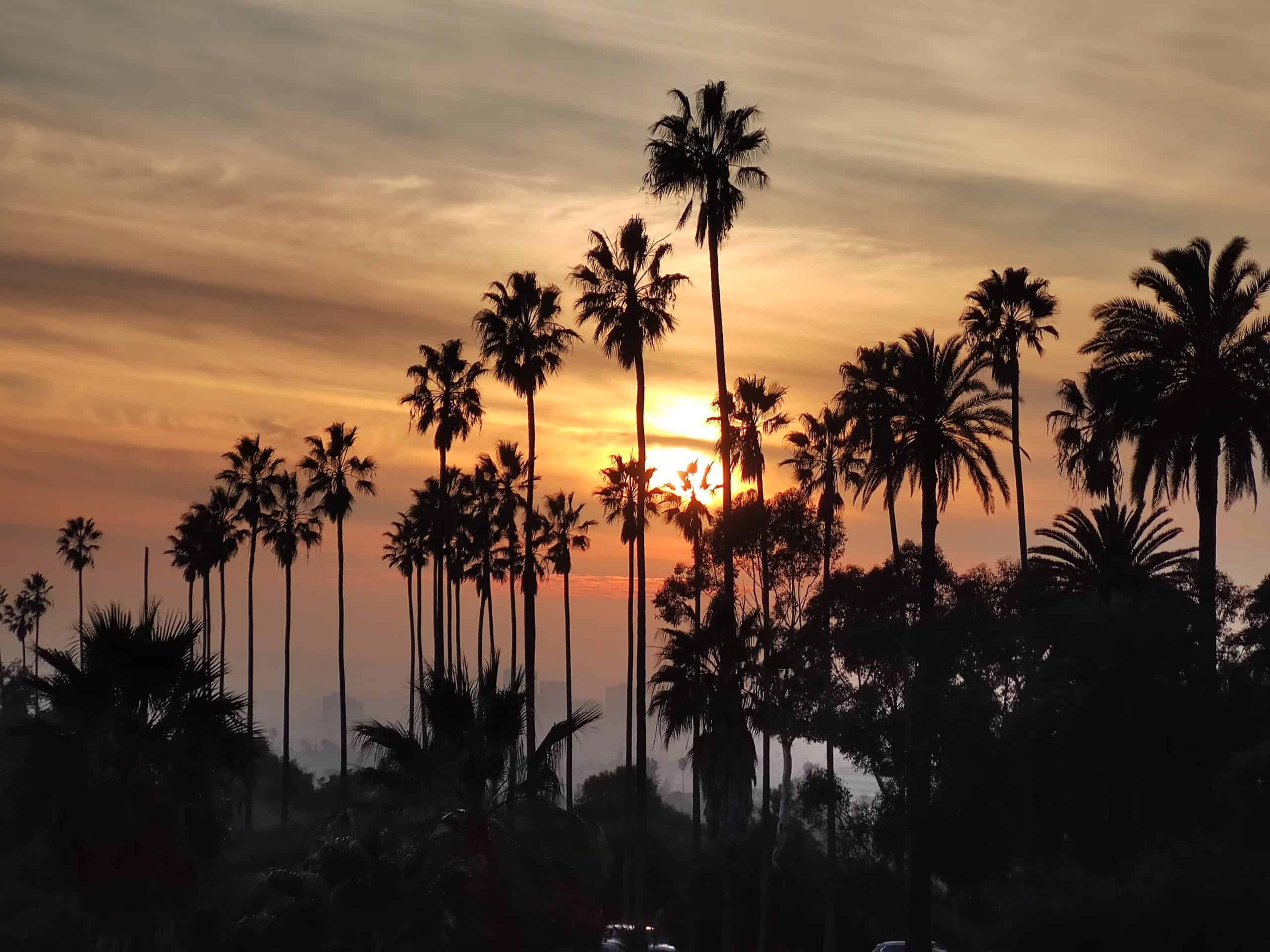
And somewhere between the two is that unmistakable Los Angeles feeling that’s so hard to put into words.
As though reality and movie magic had simply decided to coexist peacefully right here.
Maybe that’s why I love this spot so much. It doesn’t show Los Angeles as a tourist attraction. It captures a mood. And the palms are a big part of it.
Venice Beach Without Palm Trees? Unthinkable!
In places like Venice Beach, too, palm trees are simply part of the scene. They line the boardwalk, cast long shadows across concrete and sand, and visually connect the city to the ocean.
Interestingly, most palms don’t provide much shade. If you’re looking for relief from the sun on a hot summer day, you’ll find far more comfortable spots beneath plenty of other types of trees.

But shade was never the main reason Los Angeles planted all those palms.
They’re more symbol than shade tree. More scenery than shelter. And maybe that’s what gives them such a special place in the city’s identity. Their main job isn’t practical. It’s to tell a story.
A story about California, the Pacific Ocean, freedom, and a lifestyle that draws people here from all over the world.
More Symbol Than Tree
So why are we so fascinated by palm trees in the first place?
One possible answer is that they’re full of contradictions.
They stand for vacations and relaxation, yet they grow in one of the busiest metropolitan areas in America. They seem laid-back even when they’re standing right beside a packed highway. They look delicate, yet many of them handle heat, smog, and dry spells remarkably well.

They’re also a blank canvas for our dreams.
For many people, palms represent freedom, a fresh start, and that vague feeling that something wonderful might be waiting just around the next corner. The California dream isn’t always explained, but it’s certainly photographed a lot. And palm trees almost always have a starring role.
It took me a few months in Los Angeles to notice just how often palm trees appear in logos, advertising, souvenirs, and vacation photos. At first, you simply accept them as part of the background. Then, at some point, you realize they’ve become a kind of visual shorthand for California.
Why Palm Trees in Los Angeles Are Controversial
Of course, not everyone is a fan.
Depending on the species and growing conditions, palms can require irrigation, and many provide less shade and habitat for native wildlife than other trees. That has prompted urban planners to question whether their iconic appearance makes up for the ecological trade-offs.
As a result, some neighborhoods are increasingly planting other tree species that can better meet the challenges ahead. But that doesn’t mean palm trees are about to disappear.
They’re simply too deeply rooted in the collective image of Los Angeles. They’re part of the city’s identity, even though most of the species were originally brought here from somewhere else.
Why Los Angeles Wouldn’t Be the Same Without Palm Trees
For many people, imagining Los Angeles without palm trees just feels wrong.
A little like picturing Paris without the Eiffel Tower or San Francisco without the Golden Gate Bridge.
And yet most of those palms aren’t native to the region. Somehow, they’ve still become one of the city’s most powerful symbols.
For me, they’re now as much a part of Los Angeles as the Pacific Ocean, the mountains on the horizon, and those long sunsets over the city. When you first visit, you might see them as nothing more than beautiful trees. Stay a little longer, and you begin to realize they mean something more.
They tell stories of dreams, Hollywood, new beginnings, and the unique way Los Angeles sees itself.
And maybe that’s why a view of the skyline doesn’t quite feel like Los Angeles until the silhouette of a palm tree appears somewhere between the buildings.
The best way to understand Los Angeles is to experience it! Discover the city’s highlights on my Best of Los Angeles Tour, or make the day your own with a Los Angeles Private Tour.
